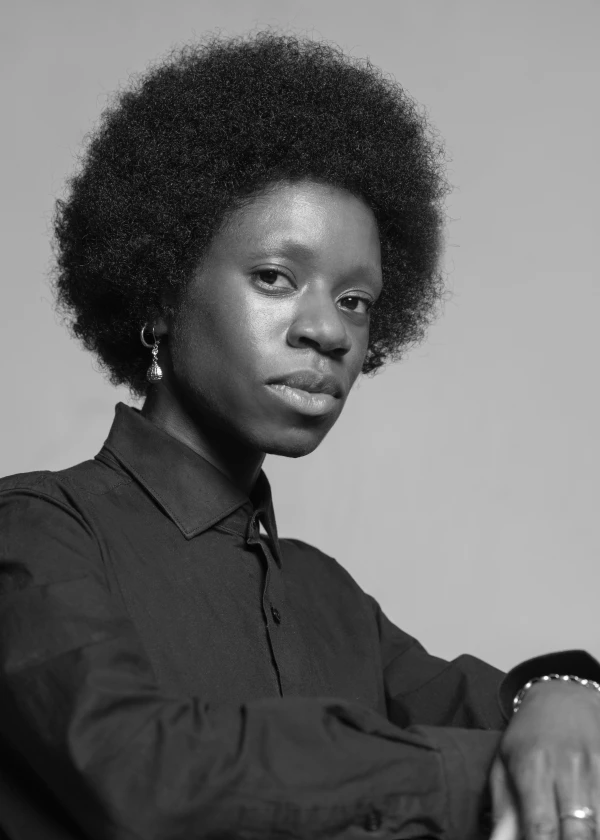

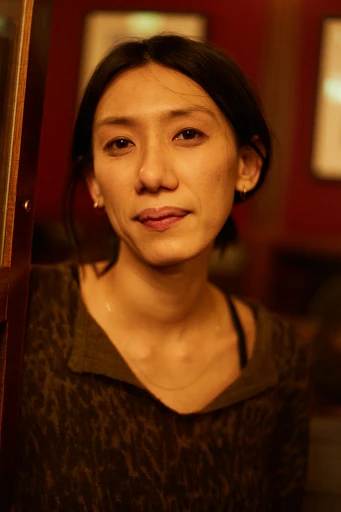
Aurelia Guo is a writer and researcher based in London. She is a Lecturer in Law at Goldsmiths, University of London.
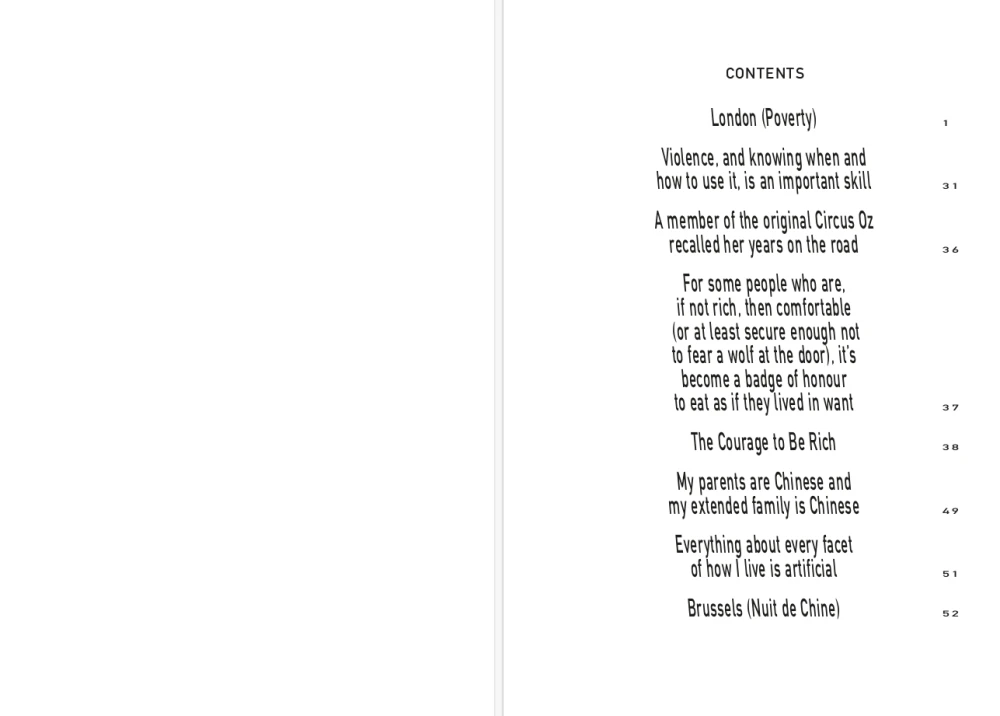
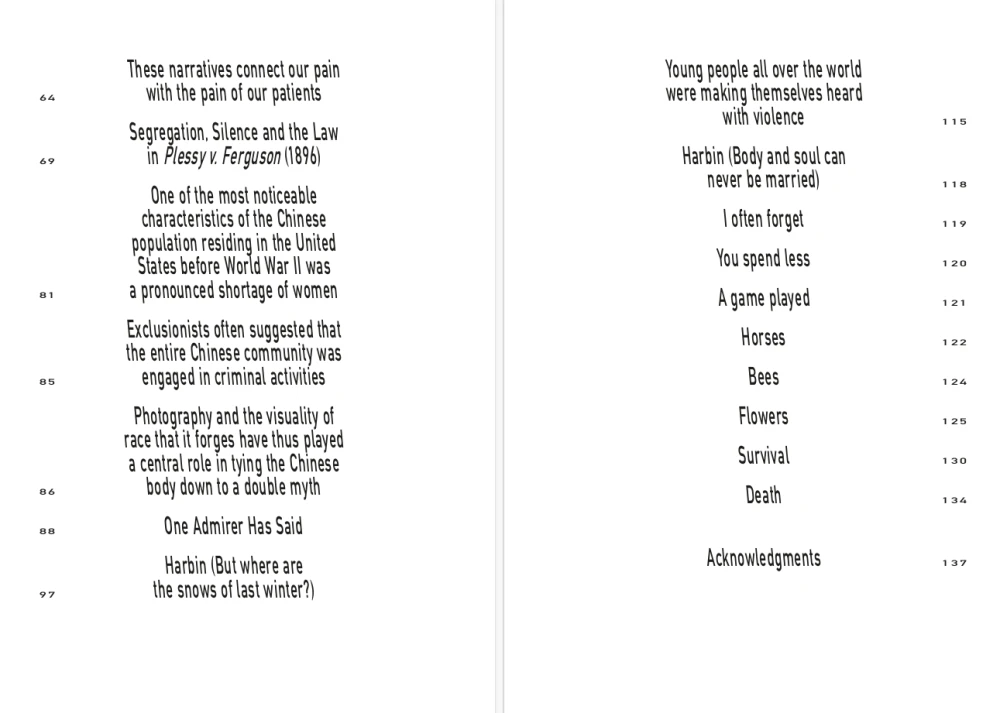
In World of Interiors I use collage and appropriation to destabilise the first-person ‘I’. I also write directly about the inescapable condition of being perceived and positioned by other people. Our lives take place in time and space, meaning in history and geography, as well as in relation to one another – not just interpersonally, but intergenerationally, with all the baggage of race, class, gender and nation that this implies. I write about economic cycles of wealth and poverty at the levels of the individual, group and state. The book is about travel and immigration: migrants, tourists and refugees. It is about the work of survival and the cost of survival. It is also a hopeful book – about how strong and indomitable the will can be.
Aurelia Guo is a writer and researcher based in London. She is a Lecturer in Law at Goldsmiths, University of London.
Tracing the borders between essay and poem, quotation and the fragment, Aurelia Guo’s writing circles and contradicts narratives of power. Her close readings of contested histories, abject biographies and her own experiences of migration and displacement transfix and unsettle. This book is mesmerising.
An uncategorisable writer … intimate, impersonal, visionary and pitiless.
In 2005, Françoise Vergès published a book with Aimé Césaire, in which she recorded – three years before his death – powerful remarks by the poet, as incisive and combative as ever, yet imbued, as always, with the universal humanism to which he had remained committed throughout his life. It is fortunate that, drawing inspiration from this interview, Another Sun allows us to hear, in their intertwining, the voices of Césaire and Vergès herself, conveying a message of emancipation and fraternity/sorority that our world needs to hear today.
Waiting at Martinique Aimé Césaire International Airport, in the city of Le Lamentin, Mayra A. Rodríguez Castro browses the airport kiosk. Alongside books by Césaire, it offers titles by Frantz Fanon, Maryse Condé and Patrick Chamoiseau. She picks up a copy of Nègre je suis, nègre je resterai, a conversation between Françoise Vergès and Césaire published in 2005, and embarks. In Another Sun, Rodríguez Castro and Vergès revisit that seminal conversation, resulting in an eclectic text shaped by ongoing struggles.
With poems by Danielle Legros Georges, Wole Soyinka, Ishion Hutchinson, Clarisse Baleja Saïdi, Aimé Césaire and Jean Érian Samson.
Françoise Vergès is a writer, decolonial anti-racist feminist and curator. She is currently working on the fabrication of premature death, imperialism and anti-imperialism, the colonial roots of fascism, private property and racism. In parallel, she is working on a film about communist anti-colonial struggles on Réunion and in the Southwest Indian Ocean based on her parents’ personal archives and her own. Her recent publications include: Making the World Clean: Wasted Lives, Wasted Environment, and Racial Capitalism (2024); A Programme of Absolute Disorder: Decolonizing the Museum (2024); A Decolonial Feminism (2021); The Wombs of Women: Race, Capital, Feminism (2020); and Resolutely Black: Conversations with Françoise Vergès, with Aimé Césaire (2019). She has written documentary fifilms on Maryse Condé and Aimé Césaire (both 2013) and was a project advisor for Documenta11 (2002) and La Triennale de Paris (2012). Vergès is currently senior research fellow at the Sarah Parker Remond Centre for the Study of Racism and Racialisation, University College London.
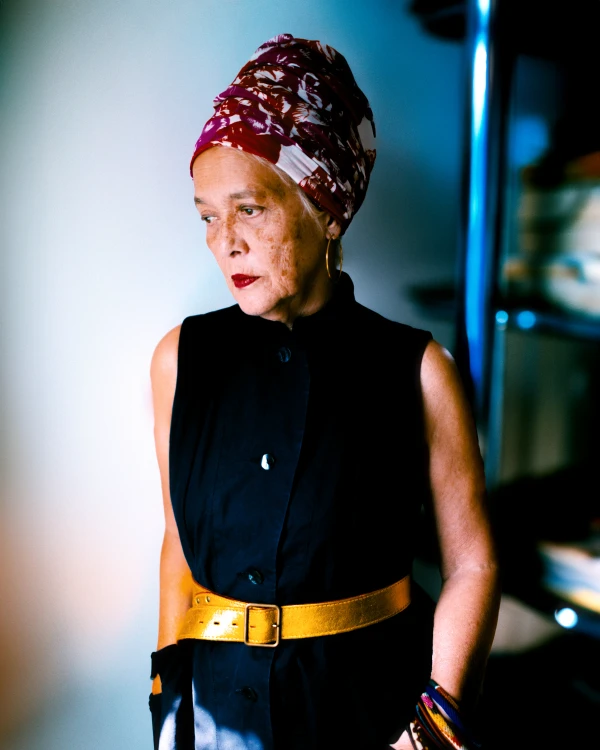
Mayra A. Rodríguez Castro is a writer and editor. She was a postdoctoral fellow at Freie Universität Berlin in 2018, recipient of a fellowship with Anne Waldman at Naropa University in 2019, and a textual residency fellow at Akademie Schloss Solitude in 2025. Her essay ‘El nuevo sublime’ was a finalist for the National Essay and Criticism Award in Colombia in 2019. Rodríguez Castro is the editor of Dream of Europe: Selected Seminars and Interviews, 1984–1992 (2020), a collection of previously unpublished lectures by Audre Lorde, which was shortlisted for the Pegasus Award for Poetry Criticism in 2021. She is also the author of The Echo (2025) and Blood (2026).