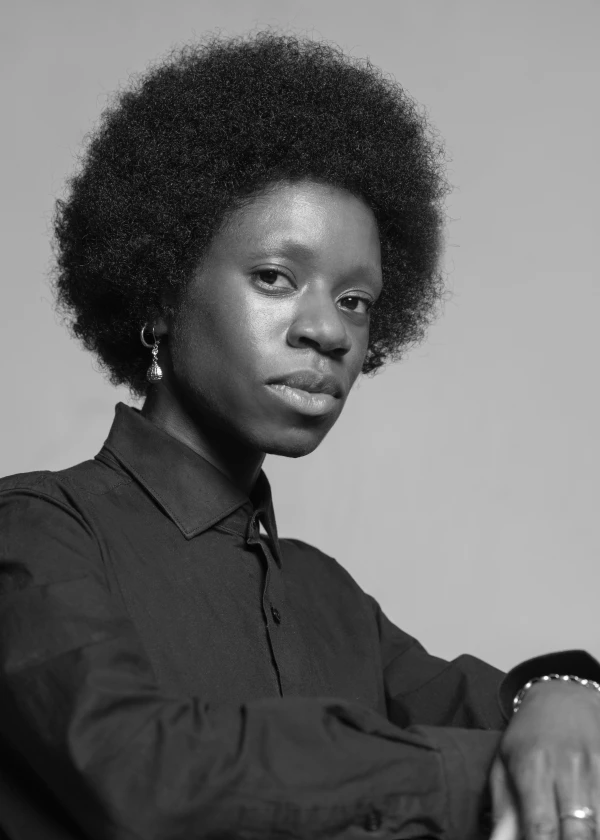
Fanny Howe was born on 15 October 1940 in Buffalo, New York. She is the author of more than fifty books of poetry and prose, and taught literature and writing throughout her life, mentoring a generation of American poets, activists and scholars working at the intersection of experimental and metaphysical thinking. She was professor emerita in literature at the University of California, San Diego, until her death on 8 July 2025 in Lincoln, Massachusetts.
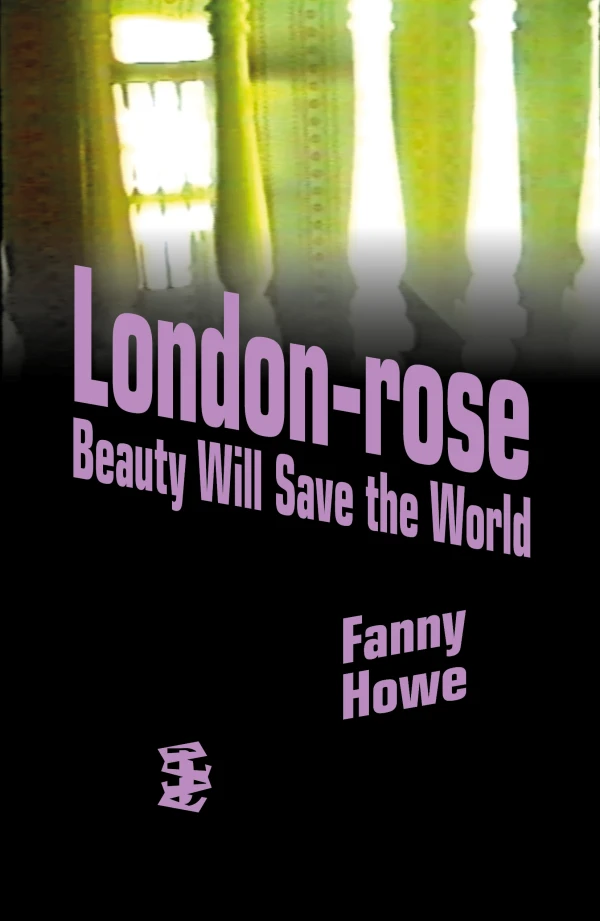
London-rose | Beauty Will Save the World
£ 11.99
London-rose | Beauty Will Save the World
Fanny Howe
It feels we aren’t reading prose but language that oscillates between liturgy and prayer.
The story of failure asks one question only: What do people who lose do next? “Let the best one win.” War is one way. The other way is religion. Let me at the stakes. It’s so much a matter of patience. No fury, beyond all reason, no sequence broken, but diverted. Nothing seems to cooperate when you lose control. Blue becomes violet. Bend your head to the blank. The solution is so simple: don’t identify yourself with your description of yourself.
- 978-1-7398431-1-3
- 1 b&w illustration
- 21.6 x 13.9 cm
- 104 pp.
- Paperback
- 26 April 2022
About the author
Press (6)
Rights
- Danish (Møllegades)
Upcoming (2)
| 21 September | Edinburgh | Fanny Howe films at Embassy Gallery |
| 10 October | Christchurch | Fanny Howe films at Te Puna o Waiwhetū Christchurch Art Gallery |


Another Sun
£ 11.99
Another Sun
Françoise Vergès Mayra A. Rodríguez Castro
In 2005, Françoise Vergès published a book with Aimé Césaire, in which she recorded – three years before his death – powerful remarks by the poet, as incisive and combative as ever, yet imbued, as always, with the universal humanism to which he had remained committed throughout his life. It is fortunate that, drawing inspiration from this interview, Another Sun allows us to hear, in their intertwining, the voices of Césaire and Vergès herself, conveying a message of emancipation and fraternity/sorority that our world needs to hear today.
Waiting at Martinique Aimé Césaire International Airport, in the city of Le Lamentin, Mayra A. Rodríguez Castro browses the airport kiosk. Alongside books by Césaire, it offers titles by Frantz Fanon, Maryse Condé and Patrick Chamoiseau. She picks up a copy of Nègre je suis, nègre je resterai, a conversation between Françoise Vergès and Césaire published in 2005, and embarks. In Another Sun, Rodríguez Castro and Vergès revisit that seminal conversation, resulting in an eclectic text shaped by ongoing struggles.
With poems by Danielle Legros Georges, Wole Soyinka, Ishion Hutchinson, Clarisse Baleja Saïdi, Aimé Césaire and Jean Érian Samson.
- 978-1-0684395-2-0
- 21.6 x 13.9 cm
- 100 pp.
- Paperback
- 04 June 2026
About the authors (2)
Françoise Vergès is a writer, decolonial anti-racist feminist and curator. She is currently working on the fabrication of premature death, imperialism and anti-imperialism, the colonial roots of fascism, private property and racism. In parallel, she is working on a film about communist anti-colonial struggles on Réunion and in the Southwest Indian Ocean based on her parents’ personal archives and her own. Her recent publications include: Making the World Clean: Wasted Lives, Wasted Environment, and Racial Capitalism (2024); A Programme of Absolute Disorder: Decolonizing the Museum (2024); A Decolonial Feminism (2021); The Wombs of Women: Race, Capital, Feminism (2020); and Resolutely Black: Conversations with Françoise Vergès, with Aimé Césaire (2019). She has written documentary fifilms on Maryse Condé and Aimé Césaire (both 2013) and was a project advisor for Documenta11 (2002) and La Triennale de Paris (2012). Vergès is currently senior research fellow at the Sarah Parker Remond Centre for the Study of Racism and Racialisation, University College London.
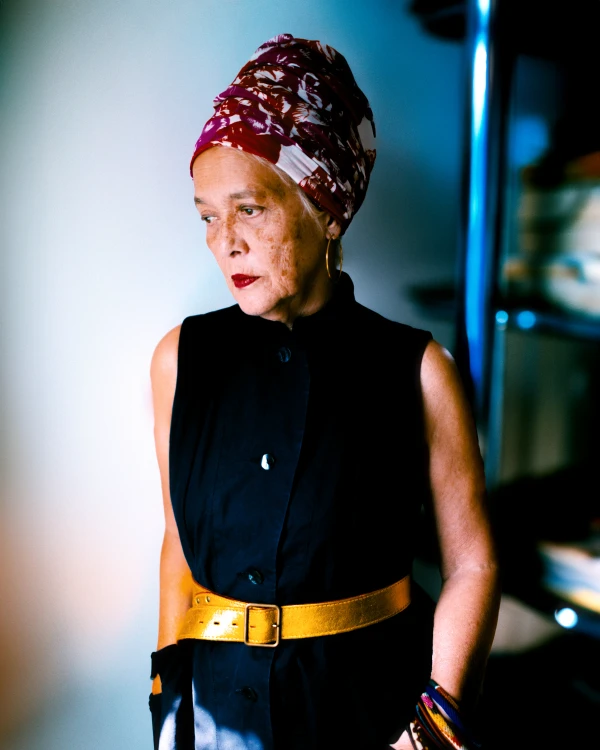
Mayra A. Rodríguez Castro is a writer and editor. She was a postdoctoral fellow at Freie Universität Berlin in 2018, recipient of a fellowship with Anne Waldman at Naropa University in 2019, and a textual residency fellow at Akademie Schloss Solitude in 2025. Her essay ‘El nuevo sublime’ was a finalist for the National Essay and Criticism Award in Colombia in 2019. Rodríguez Castro is the editor of Dream of Europe: Selected Seminars and Interviews, 1984–1992 (2020), a collection of previously unpublished lectures by Audre Lorde, which was shortlisted for the Pegasus Award for Poetry Criticism in 2021. She is also the author of The Echo (2025) and Blood (2026).